- 707-582-1228
1110 Burlingame Ave, Ste 211, Burlingame, CA 94010
People ask our winemaker this constantly: why does a single vineyard bottle run more than a blend? Simple, really. A blend has one job: taste the same year after year, so producers pull fruit from several vineyards and average out whatever each site did differently that season.
At Zeka, we’ve never chased that kind of sameness. This guide gets into what a single vineyard label actually promises, why our corner of Sonoma keeps making Pinot Noir people come back for, and what we’d look for ourselves before buying a bottle.
html
Start with the legal side. US law says 95 percent or more of the fruit has to come from the named vineyard before that label means anything. Now the part that actually matters to you as a drinker: the wine in your glass is one piece of land, unedited, nothing blended away to smooth out the rough edges.
Three things leave real fingerprints on Pinot Noir in particular:
Blend fruit from five vineyards, and those fingerprints average out into something smoother. Keep one vineyard’s fruit alone, and you taste the actual place it came from.
| Factor | Single Vineyard Pinot Noir | Blended Pinot Noir |
| Source | One specific vineyard site | Multiple vineyards or regions |
| Flavor profile
| Reflects that site’s unique terroir | Balanced and consistent year to year |
| Production volume
| Typically limited and smaller batch | Often larger scale
|
| Vintage variation
| More pronounced between years | Smoothed out through blending |
| Best for
| Wine enthusiasts seeking distinct character | Everyday drinking and consistency |
We think of it as two different jobs, not two different quality tiers. A blend’s job is consistency. Ours never was, and that’s exactly why two vintages from us, a cooler year against a warmer one, can taste like genuinely different wines rather than variations on the same theme. Nothing gets smoothed over on our end.
Sonoma’s got one county line but nineteen sub-AVAs inside it, and the conditions shift more than people expect once they actually drive through. Fog parks itself over some vineyards for half the morning while others just a few miles off sit in open sun the whole day. Somewhere across that range, growers have planted over 13,000 acres of Pinot Noir, running from sea level up to about 2,500 feet. The total acreage isn’t really the point, though. Where those acres happen to sit is what shapes the wine.
Fruit grown in our part of Sonoma tends to hang longer on the vine than warmer inland sites allow for. That additional hang time is what builds the firmer tannin and deeper extraction our wines are known for, without losing the cherry and spice character that stays recognizably Pinot Noir no matter where it’s grown.
The wind shifts fast once you leave Bennett Valley, and that’s not a coincidence. We sit in the specific gap between the Sonoma Valley and the Petaluma Gap, where coastal air actually cuts through instead of piling up against a ridge the way it does in the valleys around us. One geographic quirk, and it’s the reason our fruit comes in cooler and more structured than vineyards just a few miles away in more sheltered ground.
Cooler means slower. Slower ripening lets our grapes hang longer on the vine, and that extra time is what gives acidity room to build rather than burn off under direct heat. Ask anyone on our team, and they’ll tell you: that’s the whole reason our wines age well instead of just tasting fine the week they arrive.
Forget “best” as a fixed idea. The right bottle is whichever one actually matches what you’re looking for.
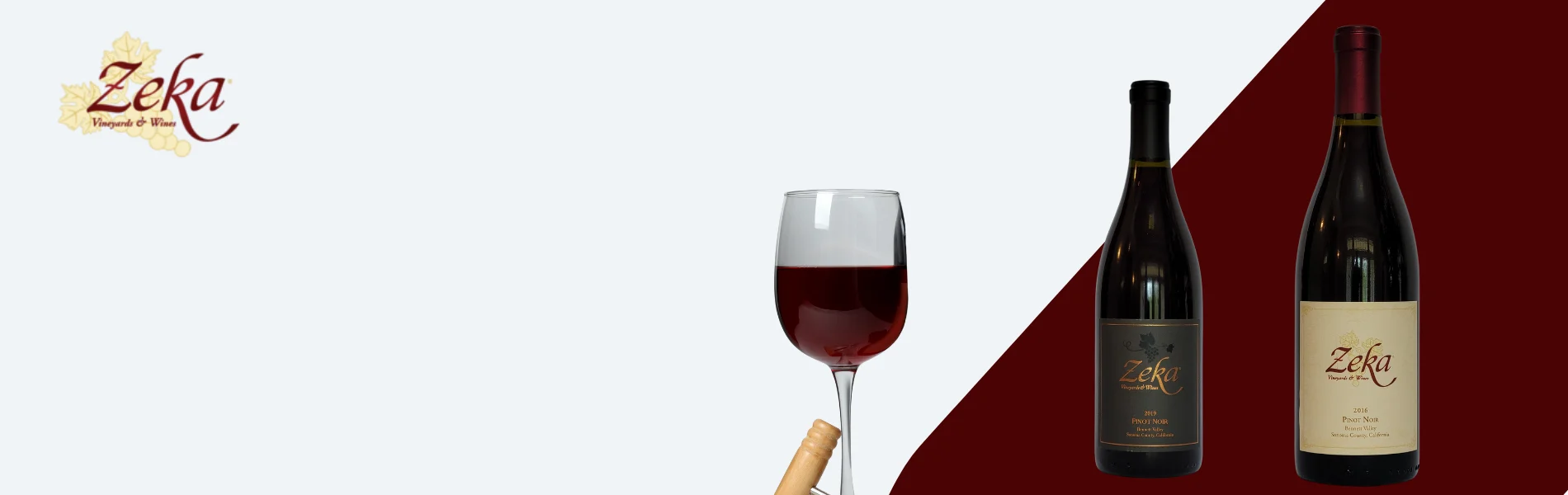
Cool years and warm years hand us genuinely different wines off the exact same vines. Cool vintages come out brighter and more delicate. Warm ones lean richer, riper, more concentrated. Loved a specific vintage of ours before? Tell us. It tells us a lot about where to point you next.
An ordinary Tuesday doesn’t need much; a younger vintage with its primary fruit still showing does the job fine. Save the library vintages, the ones that have had years to actually open up, for something worth marking, an anniversary, a milestone, any dinner where the wine deserves to be more than background noise.
We hear this a lot: people assume Pinot Noir only works with steak. It doesn’t. Roast chicken, grilled pork, seared tuna, a mushroom risotto- this is one of the more food-friendly reds you can keep around the house.
Nobody likes paying more without understanding why, so here’s exactly where that extra cost goes for us.
A few habits protect you when the bottle you want isn’t sitting in front of you.
One of our customers came to us needing a bottle for her parents’ fortieth wedding anniversary. She’d already tried browsing single vineyard options on her own first and hit the wall a lot of people hit, too many vintages listed, not enough context to know which one actually fit the moment.
Our team walked her through what several years of our Bennett Valley Single Vineyard Pinot Noir tasted like, since growing conditions had shaped every one of them a little differently.
She ended up picking an older vintage, one with more weight and years of development behind it, closer to something her parents might have actually poured at their own wedding decades ago.
She wrote back to us after the dinner. Everyone at the table kept bringing the wine up, she said. Walking through the vintage differences ahead of time turned what could have been a shot in the dark into a choice that actually felt intentional.
Fruit source is the whole story here. Roughly 95 percent or more of a single vineyard wine has to come from one named site. A blended Pinot Noir does the opposite on purpose, pulling from several vineyards so the flavor doesn’t shift much from year to year.
Sonoma isn’t really one climate. It’s nineteen, if you count the sub-AVAs. Some vineyards sit right where coastal fog rolls in every morning; others, just a few miles inland, barely see it at all. Add in the elevation range, sea level up to roughly 2,500 feet, and you get a county capable of wildly different Pinot Noir styles under a single name.
For the most part, yes. Buying direct from the winery is the safer route compared to a secondhand marketplace, since you’re getting accurate vintage details straight from the source. It’s also a lot easier to ask how the bottle was shipped and stored before it landed on your doorstep.
Think about what job you need the wine to do. A younger vintage suits a casual dinner where it’s playing a supporting role. An older vintage suits a moment where the wine itself is meant to be the point.
Lower yields, hands-on farming, and small production runs all add real cost per bottle compared to a larger blended wine, and once a specific vintage sells out, there’s no way to recreate it with substitute fruit.
More than most people expect. Roast chicken, grilled pork, seared tuna, mushroom-based dishes- all of it plays well against Pinot Noir’s acidity and lighter tannin, making it one of the more flexible reds to keep on hand.
Every bottle we release from Bennett Valley traces back to one specific year and one specific piece of land. Our team made those calls out in the vineyard long before the wine ever touched a barrel.
Not sure which vintage fits your occasion? Reach out. Browse our current and library releases, or just ask us directly, we’d rather talk you through it than leave you guessing.


Are you 21 years old or older?