- 707-582-1228
1110 Burlingame Ave, Ste 211, Burlingame, CA 94010
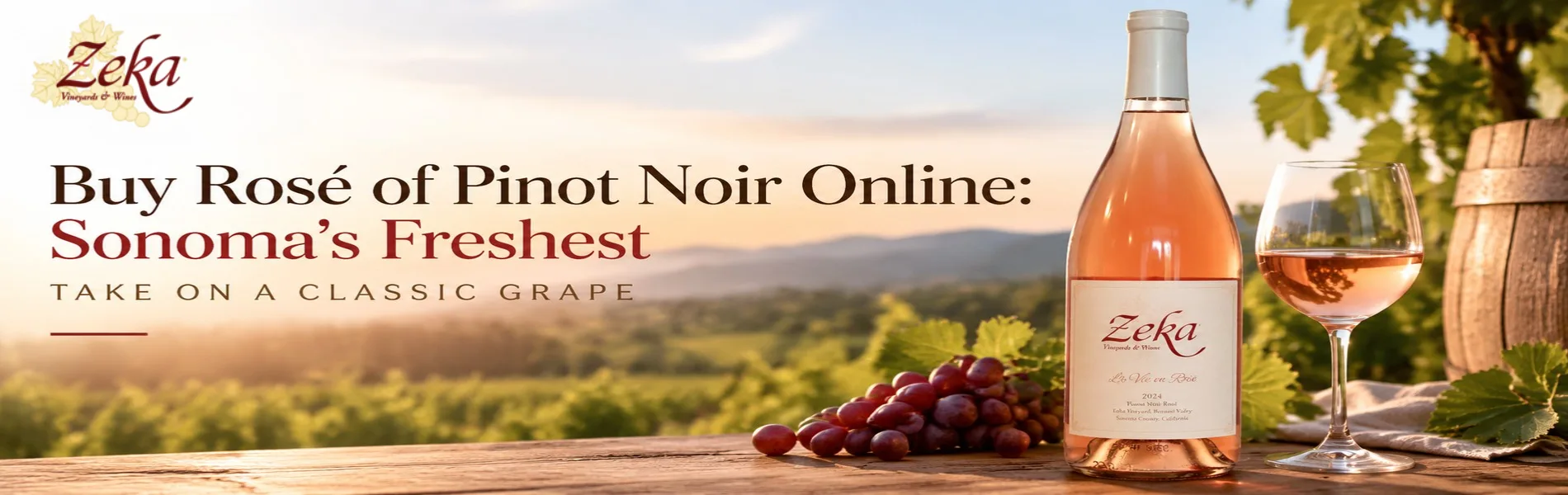
Rosé used to be an afterthought. Something you grabbed for a pool party in June and forgot existed by Labor Day. That’s shifted. People search specifically for Rosé of Pinot Noir now, not just “pink wine,” and there’s a reason for that shift: the grape itself brings something a generic blend simply can’t.
Our 2024 Bennett Valley Single Vineyard Rosé of Pinot Noir is Zeka’s first rosé release. One grape, one vineyard, nothing blended in to patch over the gaps.
People mix this up constantly. Rosé isn’t a grape at all; it’s Pinot Noir the whole way through. What turns it pink is contact time: how long the juice hangs around those dark skins before someone decides to pull it off.
Give it a few hours on the skins, and you land somewhere around that pale salmon color everyone associates with rosé. Leave it longer and congratulations, you’re making red wine instead. Restraint is basically the whole style.
Short skin contact means you get delicate fruit and floral notes, not the heavy tannin structure of a red. Strawberry. Watermelon. Stone fruit, sometimes a little citrus on the back end. Exact profile depends a lot on where the fruit grew.
And this is exactly what most “best Pinot Noir rosé” roundups gloss over. Take the same grape, plant it in two different vineyards, and you’ll end up holding two wines that barely resemble each other. Site matters more than most people assume going in.
Drive a couple miles in Sonoma, and the weather changes entirely, fog sitting heavy in one valley, barely touching the next. Grapes here just sit longer on the vine than they would somewhere hotter, and that extra hang time is where the acidity comes from, acidity that ends up right there in the finished rosé.
Which pretty much explains why a glass of Sonoma rosé tastes nothing like one grown somewhere warm. Warm fruit softens out, gets broader. Cool fruit stays tight and bright, even once most of the tannin and color get stripped away during pressing.
Bennett Valley is where our fruit comes from, sitting right in that corridor between the Sonoma Valley and the Petaluma Gap. Wind off the coast doesn’t stall against a ridge here, it just blows straight through, and that keeps our grapes noticeably cooler than fruit grown only a few miles away.
Cool grapes take their time ripening. That slower pace is exactly what lets acid build up before sugar levels catch up, which honestly is the whole job description for a decent rosé.
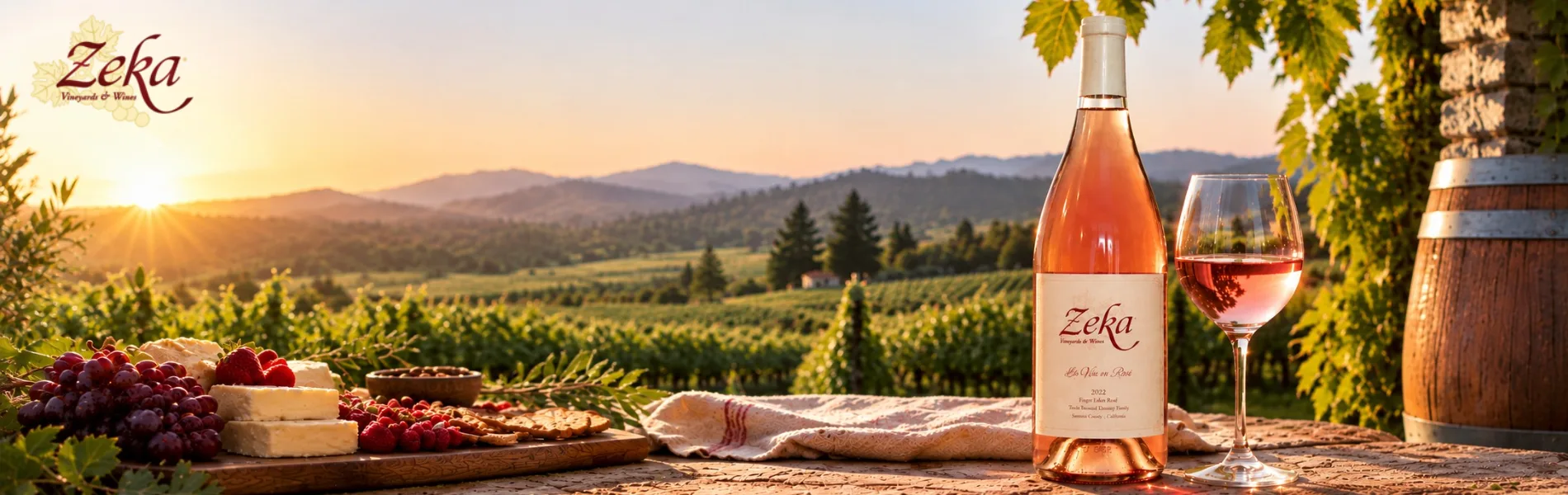
This is the first rosé we’ve ever bottled, made from the exact same single vineyard fruit that goes into our red. Five months in a mix of stainless steel and neutral French oak rounded the texture out just enough, without burying the fruit underneath it. Just 75 cases came out of it.
Strawberry and light florals up front on the nose. Take a sip and strawberry shows up again, watermelon right behind it, apricot trailing somewhere in the background. All of it sitting inside a salmon-pink color that’s honestly gorgeous in the glass.
It’s young, it’s bright, and frankly it makes you want to be sitting somewhere warm with people you actually enjoy.
Not a fussy bottle. Light cheeses and charcuterie, shellfish, or honestly nothing at all, it holds up fine on its own. Chill it well before pouring.
“Best” gets tossed around constantly in wine marketing until it means nothing. So here’s what we’d actually check for ourselves before buying a bottle.
Balance sits at the top of the list. A rosé shouldn’t taste like candy, but it shouldn’t taste watery either; fruit and acidity need to hold each other in place.
Dry finish matters too. A lot of mass-market rosé leans sweet because sweetness sells broadly. Better bottles finish dry and let the actual fruit do the talking instead of leaning on sugar.
Small production from a single site tends to beat rosé made as a leftover, an afterthought squeezed out of extra red wine juice with no real plan behind it.
And the color should come from real skin contact time. Not additives, not a splash of red wine stirred in after the fact to hit a target shade on paper.
Ever grabbed a rosé expecting something crisp and ended up with something closer to syrup? You’re not alone there. People use “rosé” and “sweet blush wine” like they’re interchangeable, and they’re really not. Ours finishes dry. Built for sipping slowly, not gulping.
Ordering wine you can’t see or smell first makes people nervous, fair enough. A handful of habits make it easier.
Buy straight from the winery when it’s an option. You get accurate vintage and production numbers directly from the source instead of a secondhand listing that might be months out of date.
Pay attention to production size. Seventy-five cases doesn’t sit on a shelf long. If a specific vintage catches your eye, don’t sit on the decision too long.
Ask about shipping before you commit. Rosé takes heat damage just as badly as any other wine, and a winery shipping carelessly through a July heat wave isn’t one you want handling a bottle you’re actually excited about.
Favor producers who’ll actually talk about the vineyard. If someone can tell you exactly where the fruit came from and why that spot matters, that’s usually a decent sign they’re paying attention to the rest of the process too.
Depends on the producer, honestly, but most well-made versions finish dry, ours included. The fruit-forward nose can trick people into expecting sweetness that isn’t actually sitting in the glass.
A true rosé of Pinot Noir is 100 percent Pinot Noir, no exceptions, with the color coming from limited skin contact rather than a splash of some other grape mixed in. A generic rosé blend doesn’t play by that rule; it mixes whatever gets the flavor or price point a producer’s after.
Fog and coastal wind shift dramatically across short distances here. A cooler site like Bennett Valley lets fruit hang around longer, building up more acid along the way. That acid doesn’t disappear during winemaking; it shows up right in the finished glass, giving the wine more backbone than anything grown somewhere warmer.
Serve it cold, roughly 45 to 55 degrees. If the bottle’s been sitting in your fridge a while, pull it out a few minutes before pouring. Ice cold might feel right, but it actually flattens the fruit.
Drink it young. That’s really the point of rosé generally, and it’s exactly why a fresh vintage like our 2024 works the way it does.
There are only 75 cases of this wine, all from the same Bennett Valley fruit that goes into our red. Sounds like your kind of bottle: salmon-pink, strawberry, watermelon, real acid holding it together? Grab it here before it’s gone. Got a question about the vintage or the shipping? Just ask.


Are you 21 years old or older?